Cash for Grass, and the Rules of the Nevada Yard
Southern Nevada will pay you up to $7 a square foot to trade lawn for desert landscaping — while a first-of-its-kind law reshapes the valley's grass. Here's exactly what buyers and sellers need to know.
In the Mojave, water is the whole story. Las Vegas gets about four inches of rain a year, and roughly 90% of the valley's water comes from Lake Mead — now near historic lows. That reality has quietly moved into your front yard, your water bill, and the value of your home. The good news: Nevada also pays you to adapt.
The desert reality. In the Mojave, water shapes your yard, your bill, and your home's value.
Four Numbers Behind Your Yard
The Water Reality
The Colorado River has been in shortage for years, and federal declarations since 2021 have trimmed Nevada's annual draw. Because Lake Mead supplies about 90% of the valley's water and desert rainfall is negligible, the region leans hard on conservation. The single biggest lever is outdoor watering — so that's where the rules and the incentives are aimed.
It's working. SNWA says the community has cut water use nearly in half per person since 2002, even as the valley added hundreds of thousands of residents. The math is stark: a square foot of grass drinks about 73 gallons a year, versus roughly 18 gallons for drip-irrigated desert plants. Convert a lawn and you can cut that area's water use by 50 to 80%.
Replacing water-thirsty grass is the most effective water-saving measure that you can take.— Bronson Mack, Southern Nevada Water Authority
Cash for Grass, Literally
Through SNWA's Water Smart Landscapes Rebate, single-family homeowners currently earn $5 per square foot of live grass replaced with desert landscaping (first 10,000 sq ft; $2.50 after). In Las Vegas Valley Water District areas, an extra $2 pushes it to $7 per square foot; Henderson adds a flat $575; and every new tree earns $100. A typical 1,000-square-foot conversion comes back as roughly $5,000 — up to $7,000 in LVVWD areas. Rates have changed before and funds are limited, so check current terms before you plan.
Where to Start
Find current rebate amounts, your eligibility, and the application at snwa.com. Book the required pre-conversion inspection before removing a single blade — and confirm any city-specific bonus (LVVWD or Henderson) that stacks on top.
.png)
Cash for grass. Southern Nevada pays up to $7 a square foot to swap lawn for desert landscaping.
The 2026 Turf Ban — What It Really Covers
Nevada's AB356 — the first law of its kind in the country — bans Colorado River water for "nonfunctional turf" on property not zoned for single-family homes, taking full effect January 1, 2027 (removal by December 31, 2026). That means decorative grass at office parks, shopping centers, apartment and condo complexes, HOA common areas, medians and streetscapes has to go. Here's the part that matters most to homeowners:
Single-Family Lawns Are Exempt
Your own front yard and back yard are not affected — keep your grass if you want it. Parks, schools and real sports fields are protected too. The rebate is there if you choose to convert, but it's your call.
Common & Commercial Turf
HOA common areas, apartment/condo grounds, commercial and government property must convert by the deadline. And new residential developments can no longer install front-yard grass at all.
The Watering Playbook
Every address is assigned a watering group (look yours up at snwa.com), and the number of allowed days shifts by season. Two rules hold year-round: no watering on Sundays, and in summer no sprinklers between 11 a.m. and 7 p.m. Drip irrigation is allowed any day, and water-waste violations can draw a fine.
Your HOA Can't Say No to Xeriscape
In an HOA-heavy market like Las Vegas, this one matters. Under NRS 116.330, a Nevada HOA cannot prohibit you from installing drought-tolerant landscaping — in your front yard or back yard. The catch: you must submit your design for architectural review first, and it has to be reasonably in keeping with the community's style. Skip the approval step and you may be told to redo it. Nevada law also protects you from being fined simply because your lawn browns while you follow the mandatory watering schedule.
Buyers & Sellers, Take Note
◆ If You're Buying
- Check the community's common areas. Buying into an HOA or condo that still has unconverted decorative turf? That mandatory removal is a looming cost — ask whether it's funded or headed for a special assessment.
- Factor the water bill. A big lawn in the desert is an ongoing expense; a converted yard is cheaper to run.
- New build? Expect no front-yard grass — and you can still claim the rebate on any qualifying turf you convert.
◆ If You're Selling
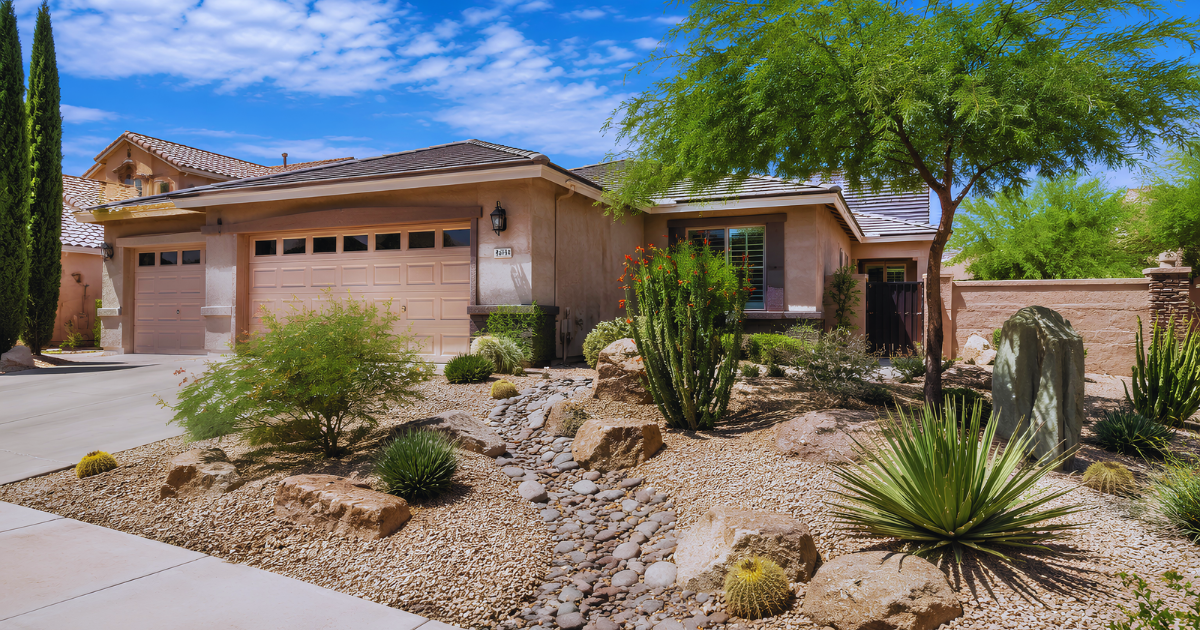
- A water-smart yard sells. Low-maintenance desert landscaping reads as move-in-ready and cost-efficient to today's buyers.
- Convert before you list. The rebate can offset much of the cost, and a fresh xeriscape lifts curb appeal fast.
- Know your numbers. Be ready to speak to watering rules and any HOA turf obligations — informed sellers close with less friction.
.png)
Curb appeal, less water. A water-smart yard reads as move-in-ready — and lifts value fast.
Thinking About Your Nevada Yard — or Your Next Move?
From curb appeal to closing, Legacy Real Estate Group knows this valley — the market, the rules, and what actually adds value to your home.
Sources: Southern Nevada Water Authority (Water Smart Landscapes Rebate; watering schedule); City of Henderson & Las Vegas Valley Water District (local rebate bonuses); Nevada Assembly Bill 356 (2021) nonfunctional-turf law; Nevada Revised Statutes 116.330. Rebate amounts, funding and schedules are current as of 2026 and subject to change — confirm details at snwa.com.
This article is for general educational purposes only and is not legal, financial, or landscaping advice. Verify program terms, deadlines and eligibility with SNWA and your local water district or HOA. Legacy Real Estate Group is committed to the letter and spirit of U.S. policy for equal housing opportunity.